
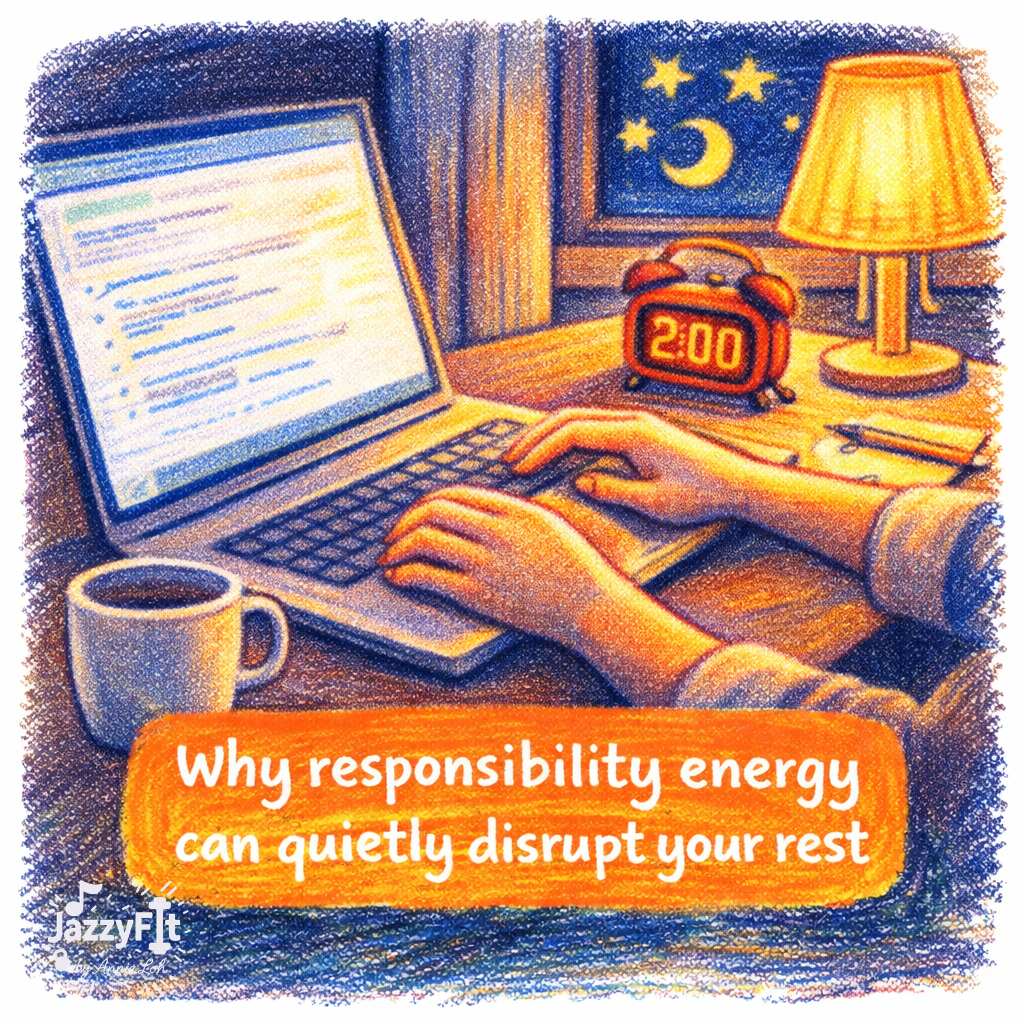
⏰ Deadlines Don’t Shout. They Hum.
Deadlines rarely scream.
They hum in the background.
During the day, you function. You talk. You work. You plan.
But at night, when the world quiets down, the hum becomes louder.
Not dramatic.
Just persistent.
Your body lies down.
Your mind stays standing.
And that’s usually when sleep becomes lighter.
🧠 Why Deadlines Affect Sleep (More Than We Realise)
Deadlines create something called unfinished mental loops.
When something is incomplete — a project, a bill, a commitment — your brain keeps it slightly active. Not loudly. Just in the background.
At night, when everything gets quiet, those loops get louder.
Here’s what happens biologically:
🧠 Your brain interprets unfinished work as “important.”
🧠 Important things trigger alertness.
🧠 Alertness activates stress hormones like cortisol.
🧠 Stress hormones reduce deep sleep.
It’s not panic.
It’s vigilance.
Your nervous system thinks:
“Let’s stay a bit ready.”
Sleep, however, requires the opposite message:
“It’s safe to switch off,”
Deadlines blur that signal.
💰 When the Deadline is Financial
I have a friend who hasn’t been sleeping well.
He’s trying to meet monthly bills.
Serving a loan.
Making sure everything holds together.
He doesn’t talk about it dramatically.
But at night, his mind runs numbers.
“How much left?”
“What if something unexpected happens?”
“Can I sustain this?”
Financial pressure touches something deep:
Security. Stability. Survival.
When money feels tight, the brain moves into protection mode.
Protection mode does not prioritise deep sleep.
It prioritises readiness.
There’s no weakness in that.
It’s biology trying to help.
😮💨 The Quiet Feelings That Come With It
You might notice:
🟢 Waking earlier than usual
🟢 Light, fragmented sleep
🟢 Dreams about work or money
🟢 A subtle tightness in the chest
🟢 A feeling of being “on call” even in bed
These are not character flaws.
They are stress responses.
Naming them gently lowers internal noise.
”This is pressure.”
Not: “Something is wrong with me.”

🌙 What Helps Lower the Internal Noise
Not fixes.
Not hacks.
Just gentle encounters.
1️⃣ Create a Clear “Off-Duty” Signal
The body needs a transition.
It can be:
🛀 A warm shower
🕯️ Dim lighting
🌬️ Slow breathing
🧘♀️ Light Stretching
🎶 Soft music
Consistency matters more than intensity.
You’re teaching your nervous system:
“Work is over for today.”
2️⃣ Close the loop before Bed
Not perfectly.
Just intentionally.
Write down:
🟢 What is pending
🟢 What is enough for tomorrow
🟢 When you’ll continue
The brain relaxes when it sees a container.
3️⃣ Reduce Nighttime Forecasting
If financial worries are looping, try this shift:
Instead of solving everything in bed, say:
“I will review this at 10am tomorrow.”
Give the mind a scheduled container.
Unscheduled worry expands.
Scheduled worry shrinks.
4️⃣ For Financial Stress — Reduce Isolation
Money stress grows louder in silence.
Talking about it — even once — reduces intensity.
Not because the problem disappears.
But because the nervous system feels less alone.
Shared reality feels safer than private fear.
5️⃣ Allow Imperfect Sleep
Ironically, fighting light sleep makes it worse.
If you wake early before an important event,
instead of:
“Oh no, I didn’t sleep enough.”
Try:
“My body is preparing. I can move gently today.”
Pressure about sleep adds another deadline:
“I must sleep well.”
Relief begins when that one is removed.
💛 Final Thoughts
If deadlines are disturbing your sleep, it doesn’t mean you’re fragile.
It means you care.
It means you carry responsibility.
It means your nervous system is trying to protect what matters.
The goal isn’t to eliminate pressure overnight.
It’s to gently teach your body:
You can care deeply and still rest.
Sleep isn’t the absence of responsibility.
It’s the recovery that allows you to carry it again tomorrow.
And tonight, even a little softness is enough. 🌙

Leave a comment