
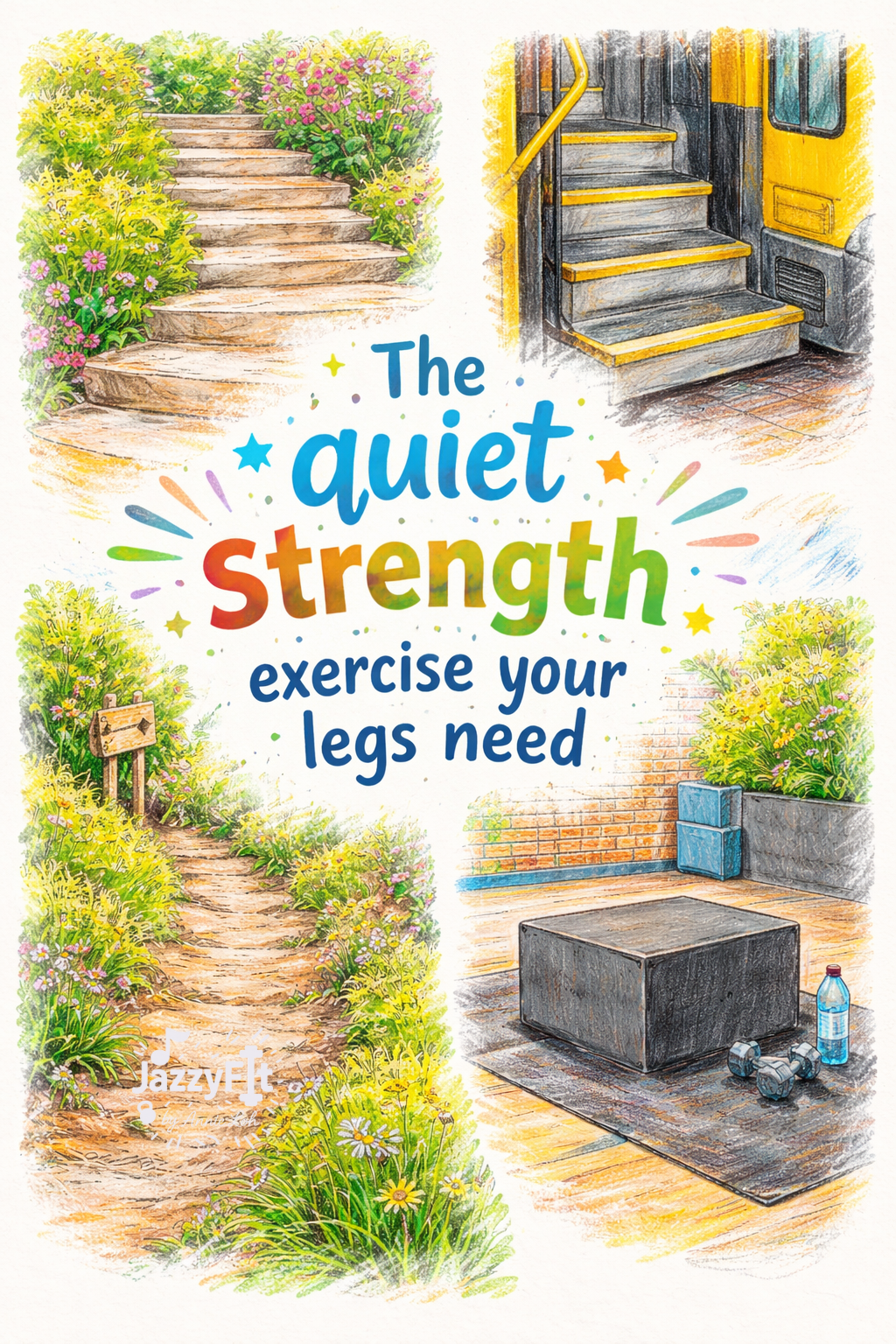
Step-Ups : A Quiet Way to Build Strength 🪜
Some days, exercise feels exciting.
Other days, it feels like one more thing the mind has to process.
That’s normal.
Not every movement has to be complicated or intense to matter. Sometimes strength grows through something simple and familiar.
Step-ups are one of those movements.
They don’t demand much attention. They simply repeat something the body already knows how to do — step upward.
And sometimes that is enough.
Step-Ups vs Lunges: Two Different Feelings of Movement 👣
Lunges are a common lower body exercise. They involve stepping forward or backward and lowering the body toward the ground.
They can feel dynamic and powerful. But they also ask the body to balance, shift weight, and move through space at the same time.
Step-ups feel slightly different.
Instead of moving forward, the body moves upward onto a step. One leg lifts the body onto a platform while the other follows.
There is usually less shifting around.
Just a steady push upward.
For some people, this makes step-ups feel more stable and less mentally demanding than lunges.
And on certain days, that quiet simplicity is welcome.
A Movement the Body Already Practices 🚶🏻♂️
Step-ups are not an unfamiliar action.
The body performs similar movements every day:
🪜 climbing stairs
🚌 stepping onto a curb
🚂 getting onto a bus or train
⛰️ walking up a slope
👣 stepping onto a platform
These actions happen naturally, often without thinking
Because of that, step-ups rarely feel complicated. They simply turn an everyday movement into intentional training.
Yes, It Still Counts as Resistance Training 💪
Resistance training simply means the muscles are working against resistance.
Sometimes that resistance comes from weights.
Other times, it comes from something the body carries all the time — body weight.
When performing a step-up, one leg lifts the entire body upward. The muscles in the thighs and hips generate the force needed to raise that weight.
This activates several important muscles:
🦵 quadriceps
🦵 glutes
🦵 hamstrings
🦵 calves
🦵 hip stabilisers
Even though the movement looks simple, the body still recognises it as strength work.
A Movement That Fits Real Life 🏡✈️
Not every day feels like a workout day.
Some days the schedule is busy.
Some days the body feels tired.
Some days the mood for exercise just isn’t there.
Step-ups are flexible in that way.
They don’t require a gym or special equipment.
They can happen:
📌 on a staircase at home
📌 on a small step or sturdy box
📌 on a park bench
📌 on a hotel stair while travelling
Even a few repetitions can gently remind the body what movement feels like.
No pressure to complete a long workout.
Just a few steps up and down.
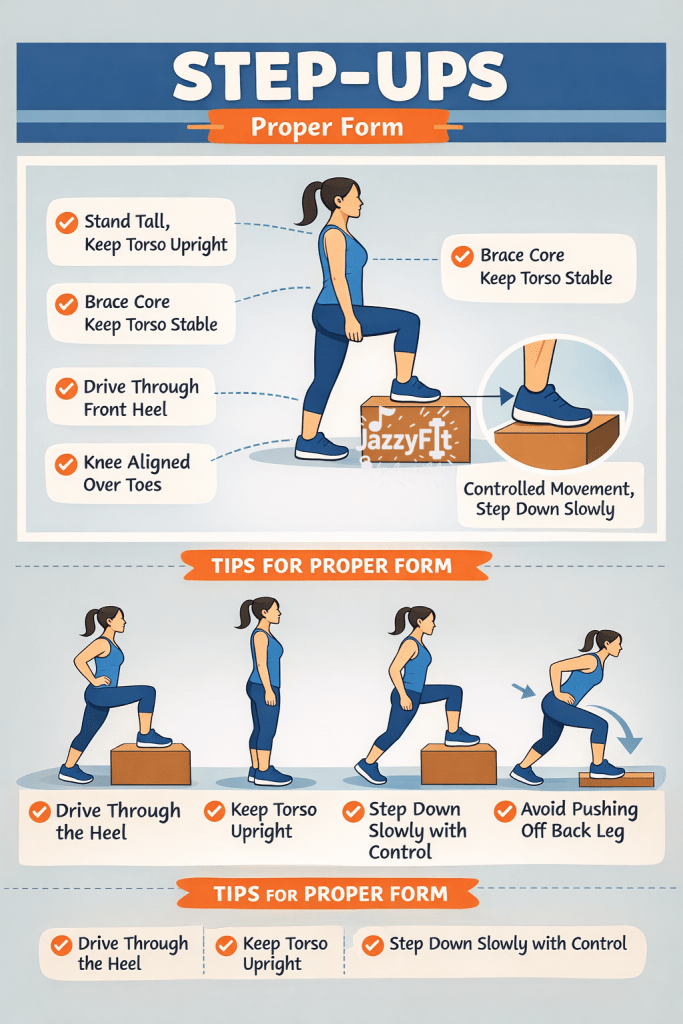
Why Step-Ups Are Often Considered a “Must” ⭐️
Many lower body exercises train both legs together.
Step-ups are slightly different.
They train one leg at a time.
This helps develop balance strength between the left and right sides of the body. It also encourages the hips, knees, and ankles to stabilise the body during movement.
Because of this, step-ups can support several aspects of lower body function.
💥 Leg Strength
The movement strengthens the quadriceps, glutes, and hamstrings as the body lifts upward.
💥 Hip Stability
The hips work to keep the body balanced during the step.
💥 Balance and Coordination
Each leg learns to support the body independently.
💥 Functional Movement
The movement pattern transfers easily to daily tasks like climbing stairs or walking uphill.
💥 Joint Support
The muscles around the knees and hips contribute to smoother, more controlled movement.
These benefits tend to develop gradually through consistent, simple repetition.
Nothing dramatic. Just steady work.
Final Thoughts 🌱
Step-ups rarely compete for attention in the world of fitness.
They don’t look flashy. They don’t require complicated setups.
But they reflect something the body already understands — stepping upward.
And sometimes strength grows quietly through movements that feel familiar.
On energetic days, step-ups can be part of a full workout.
On slower days, they can simply be a few gentle steps.
No pressure.
No need to prove anything.
Just a small movement that keeps the body connected to strength, one step at a time.

Leave a comment