
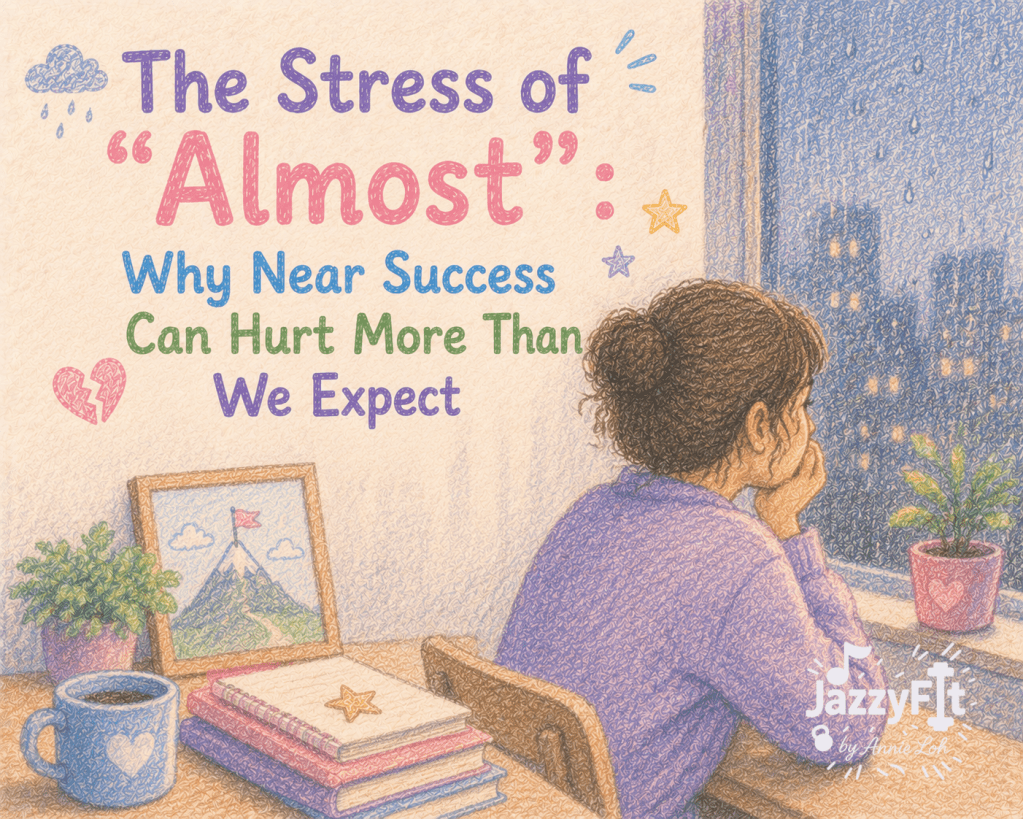
🌧️ When Hope Doesn’t Bloom: Why Disappointment Can Feel So Stressful 💙
Have you ever planned your future around something that hadn’t happened yet?
Maybe it was a dream job.
A promotion.
A relationship.
A business deal that seemed almost certain.
You could already imagine the smile on your face, the bills you’d finally pay, the family trip you’d book, or the dreams you’d begin chasing.
Then one day…
It didn’t happen.
Suddenly, it feels as though the ground beneath your feet has shifted.
If you’ve ever wondered why disappointment can hurt so deeply, you’re not “too emotional.” There’s actually a fascinating scientific explanation behind it.
🧠 Why Does Disappointment Cause Stress? The Science Behind It
Our brains are incredible prediction machines.
Every day, they constantly make forecasts about what will happen next. When we strongly believe something good is coming, our brain starts preparing for that future.
🌟 1. Your Brain Starts Living in the Future
When you expect a positive outcome, your brain begins creating a mental picture of life after that event.
It isn’t just imagination.
The brain starts planning:
- “I’ll renovate my house.”
- “I’ll finally take a holiday.”
- “I’ll invest in my next project.”
- “Life is about to become easier.”
In a way, your brain has already begun spending emotional energy on a future that hasn’t arrived yet.
🧪 2. Dopamine Builds Anticipation
Many people think dopamine is simply the “happy hormone.”
Not quite.
One of dopamine’s important roles is creating anticipation and motivation.
As exciting possibilities grow, dopamine rises, making us feel hopeful and energized.
When the expected reward suddenly disappears, dopamine drops.
That emotional “crash” can leave us feeling:
- 😔 discouraged
- 😞 empty
- 😣 anxious
- 😩 mentally exhausted
⚡ 3. The Stress Response Switches On
When reality doesn’t match what the brain predicted, it interprets the mismatch as a problem that needs attention.
The body’s stress system becomes more active.
Stress hormones such as cortisol increase, preparing us to deal with uncertainty.
While this response can be helpful in genuine emergencies, it can also leave us feeling:
- restless
- unable to sleep
- constantly thinking about “what went wrong”
- emotionally drained
The bigger the expectation, the bigger the emotional gap when reality turns out differently.
💼 A Story Many of Us Can Relate To
A friend once shared something that stayed with me.
He was involved in a business deal that looked very promising.
Nothing had been finalized yet…
But in his heart, the deal already felt real.
He began planning everything.
“If this goes through, I’ll clear my debts.”
“I’ll buy new equipment.”
“I’ll help my family.”
“I’ll finally have some breathing room.”
For days, maybe even weeks, his mind was living in a future that hadn’t arrived.
Unfortunately…
The deal fell through.
Suddenly, it wasn’t just a business opportunity that disappeared.
Every plan connected to it disappeared too.
The stress wasn’t only about losing the deal.
It was about grieving the future he had already imagined.
And many of us have experienced something similar.

🌱 How Can We Ease This Kind of Stress?
The goal isn’t to stop dreaming.
It’s to dream with both hope and flexibility.
🌿 1. Hold Hope Gently, Not Tightly
It’s perfectly okay to feel excited.
But remind yourself:
“This is a possibility, not yet a certainty.”
Why does this help?
It allows your brain to stay open to different outcomes instead of becoming emotionally attached to only one.
Hope becomes a source of motivation rather than pressure.
🪴 2. Avoid Spending Tomorrow’s Success Today
Instead of planning every detail around money or opportunities that haven’t arrived, wait until they become reality.
Why?
Because every future plan becomes an emotional investment.
If the outcome changes, you lose not only the opportunity but also the emotional future you created.
Staying grounded protects your peace of mind.
🌸 3. Focus on Today’s Next Step
When disappointment strikes, ask:
“What is one thing I can do today?”
Maybe:
- send another email
- contact another client
- improve your skills
- explore another opportunity
Why does this help?
Taking action reminds the brain that although one path has closed, many others remain open.
Action restores a sense of control, and feeling in control is one of the most effective ways to reduce stress.
🌼 4. Allow Yourself to Feel Disappointed
Sometimes we tell ourselves:
“I shouldn’t feel this way.”
But disappointment isn’t weakness.
It simply means something mattered.
Allow yourself to acknowledge the sadness without letting it define you.
Why does this help?
Naming and accepting emotions helps the brain process them instead of carrying them like invisible weight.
🌅 5. Remember That One Closed Door Doesn’t Predict the Next
The human brain naturally pays more attention to losses than to possibilities.
This is known as a negativity bias, an ancient survival mechanism that helped our ancestors notice danger.
Today, however, it can make one setback feel like the end of the story.
Remind yourself:
One failed deal doesn’t mean every future deal will fail.
Each opportunity stands on its own.
Keeping this perspective helps reduce unnecessary worry and encourages resilience.
💙 Final Thoughts
Disappointment is not the opposite of hope.
It is often the price we pay for caring deeply.
Dream boldly.
Plan wisely.
But leave room for life to surprise you.
Sometimes the opportunity you expected isn’t the one that changes your life.
Sometimes it’s the next one.
So if today you’re carrying the weight of a disappointment…
Take a slow breath.
Be gentle with yourself.
The chapter may have ended, but your story hasn’t.
🌱 Every sunrise brings another chance.
🌤️ Every setback carries a lesson.
💙 And every ending leaves space for a new beginning.

Leave a Reply